Skill‑Synergy Curriculum: Using AI to Design a Personalized Onboarding Course for Every Offshore Hire
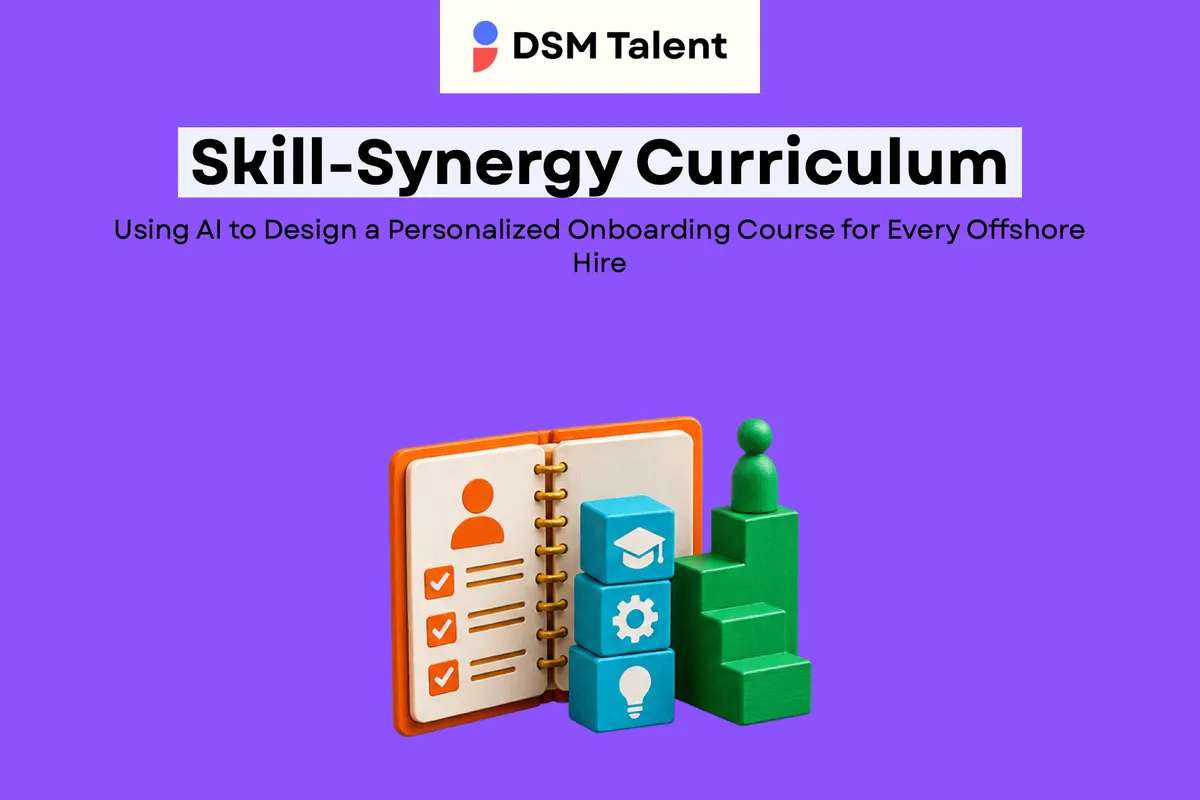
Skill‑Synergy Curriculum: Using AI to Design a Personalized Onboarding Course for Every Offshore Hire
Founders know the pain: you just signed a new offshore developer (or designer, PM, marketer), and the next two weeks feel like a white‑board full of questions, vague expectations, and endless “how‑do‑I‑do‑this‑right‑now” calls. Time is the greatest bottleneck. In fact, 40% of offshore onboarding slows a project longer than the actual build time.
The solution isn’t more people or longer contracts. It’s a structured, AI‑augmented learning journey that turns a brand‑new hire into a delivery‑ready contributor in record time.
The Challenge of Offshore Onboarding
Knowledge Silos. Each offshore lab often has its own stack, style guide, and internal terminology.
Geolocation Gaps. Time‑zone differences make live Q&A difficult and increase mental fatigue.
Founder Distraction. Without a clear hand‑off, founders spend hours answering “what is this feature?” instead of scaling.
Inconsistent Outcomes. When onboarding relies on a hero developer or a vague playbook, the quality of work is unpredictable.
Why AI Makes a Difference
AI isn’t just about automation. It can analyze thousands of onboarding documents, interview scripts, skill assessments, and previous project deliverables to generate a customized curriculum that matches the role, the hire’s background, and your company’s product focus.
Predicts the fast‑track modules that cut ramp‑up by up to 50%.
Identifies skill gaps that would otherwise become blockers.
Creates knowledge tests that validate readiness before deployment.
Aligns content with your existing business systems so the learner’s output feeds directly into your workflow.
The Skill‑Synergy Onboarding Framework
Below is a practical, repeatable framework you can deploy in less than a week. It wraps around the three key stages you already use: Recruiting → Testing → Production. For each stage, the framework adds an AI‑driven learning layer.
Stage 1 – Talent Profile & Role Mapping
Collect structured data from the applicant: resume, portfolio, GitHub, LinkedIn, skillself‑assessment.
Input the data into a role‑matching engine (e.g., an OCR‑based NLP model) which produces a skill scorecard.
Export the scorecard to a role template that lists the mandatory technical domain, the desired framework knowledge, and the soft‑skill requirements for the team.
Identify aligned gaps between the candidate’s scorecard and the role template.
Generate a personalized roadmap that orders modules from foundational to advanced, with suggested completion windows.
Stage 2 – Skill Gap Analysis
For each gap, query your knowledge base repository (wiki, Confluence, design system docs).
Use an AI summarizer to pull the most relevant docs into a micro‑learning deck.
Automate the creation of quizzes & micro‑projects that measure application of the content.
Feed the results back into the roadmap: if a skill is mastered, the hire moves to the next module; if not, the system suggests alternate resources.
Stage 3 — Sprint Learning & Knowledge Checks
Embed the learning modules into two‑week sprint cycles that coincide with your product burn‑down.
At sprint start, the AI system sends an assignment brief & deadline. The brief includes links to pre‑read, annotated diagrams, and a short video from a senior teammate.
During the sprint, the hire works on a lightweight stand‑up bot that mints a quick status update every 48 hrs.
At sprint end, a peer review bot pulls a senior teammate to validate the deliverable against the micro‑project rubric.
If the deliverable passes, the hire earns a “Sprint Pass” badge that counts toward a formal competence assessment.
If it fails, the system flags the specific skill in the next roadmap iteration.
Practical Implementation Tips
Start with a Template. Build a base curriculum in your LMS or Google Slides. Let the AI fill in the details.
Leverage Existing Tools. Integrate with
GitHubfor code quizzes,Zoomfor live demos, andTrellofor sprint tickets.Set Milestone Checks. Configure the AI to send emails at week‑4 and week‑8 asking for self‑evaluation and mentor feedback.
Use Analytics. Track time to completion, quiz scores, and sprint pass rates. Export the data into a bar graph that founders can review in a single glance.
Iterate Quickly. After the first cohort, pull out the modules that took too long and swap in new content or extra mentorship.
Common Pitfalls and How to Avoid Them
Overloading the Hire. A curriculum that tries to teach everything in a single sprint is counterproductive. Stick to 2–3 modules per cycle.
Ignoring Soft Skills. Mid‑cycle quests such as “Describe a project conflict and resolution” help integrate cultural fit.
Neglecting Mentor Time. Assign a dedicated onboarding mentor who commits 3–4 hrs per week to guidance.
Failing to Update Content. Keep the knowledge base fresh. AI can flag stale docs that have not been updated in 6 months.
Conclusion: The Pay‑off of an AI‑Driven Onboarding Curriculum
By converting the onboarding process into a data‑driven, learning‑sprint model, you achieve:
Speed to Value – Most hires are fully production‑ready in 4–6 weeks, not 12.
Predictability – Standardized deliverables mean you can plan release cycles without last‑minute surprises.
Scalable Talent – The same curriculum template scales to teams of 50 or 500 with minimal adjustments.
Founder Relief – A built‑in feedback loop frees you from day‑to‑day micro‑management.
Adopting a Skill‑Synergy Curriculum isn’t a tech gimmick; it’s a structured extension of your operating system. Start building it today and watch your offshore hires move from “learning the ropes” to “shaping the product” at twice the expected velocity.
Plan your next step with DSM Talent
Ready to discuss your next offshore hire? Explore offshore hiring with DSM Talent and start with the roles, expectations, and support your business needs.


